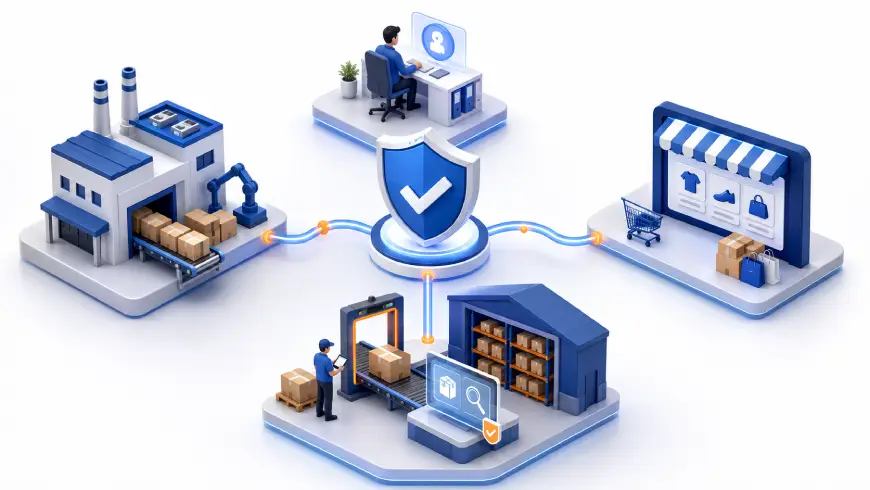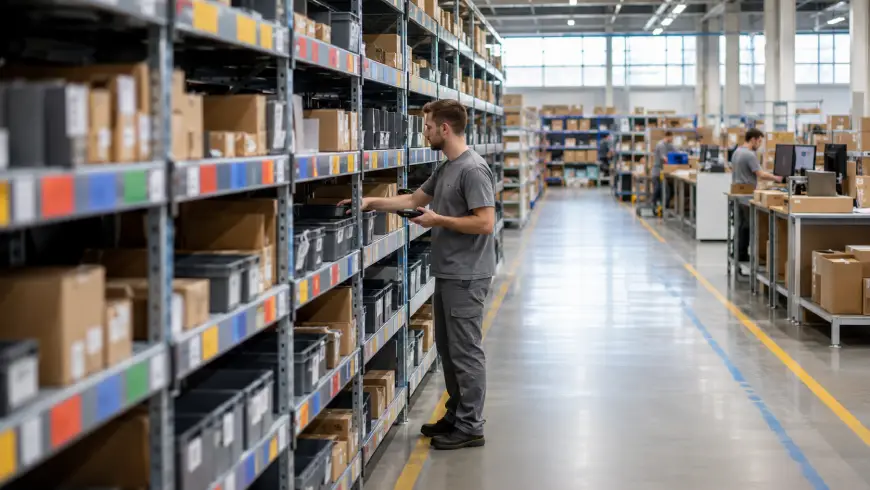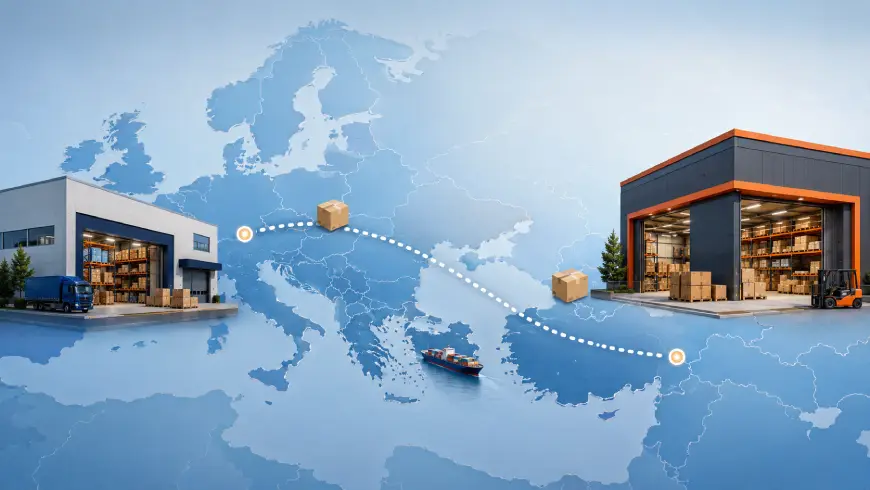


E-commerce fulfillment is entering a new era where speed alone is no longer the differentiator. The real shift is happening behind the scenes: AI in supply chain planning, robotics in fulfillment execution, and data-driven orchestration that turns warehouses into smart logistics systems. As customer expectations rise and order volumes become more volatile, brands are increasingly investing in fulfillment automation trends to reduce errors, shorten delivery windows, and keep costs under control.
In the future of fulfillment, the winners will be the businesses that can scale operations without scaling complexity. That means combining automation with visibility, using predictive models to prevent stockouts, and building resilient networks that can adapt quickly to demand spikes. If you’re planning long-term growth, these technologies are no longer optional—they are becoming the operating standard for competitive ecommerce logistics.
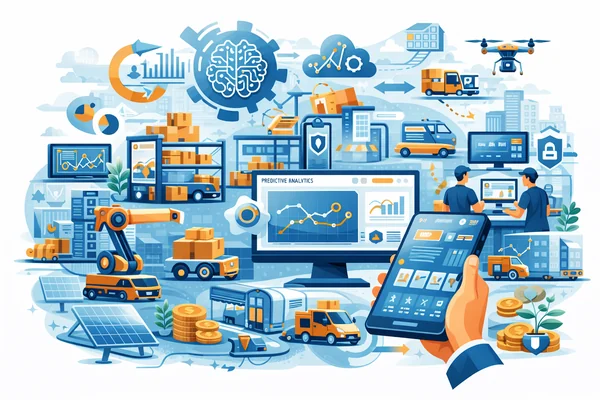
Table of Contents
Emerging Technologies Shaping the Future of Fulfillment
The next wave of next-gen logistics is being built on a stack of technologies that work together: AI for decision-making, robotics for execution, and cloud + IoT for coordination. These fulfillment technology trends are accelerating the digital transformation in logistics, enabling faster, more accurate, and more transparent operations across the entire order journey—from click to doorstep.
As automation in supply chain expands, fulfillment becomes less about manual labor and more about system design: how efficiently you can route orders, allocate inventory, and synchronize warehouse workflows with last-mile delivery partners. The result is a fulfillment model that is smarter, more scalable, and more resilient under pressure.
Role of Artificial Intelligence in Supply Chain Operations
AI in supply chain operations is increasingly used to predict demand patterns, optimize inventory placement, and detect risks before they become disruptions. With predictive logistics models, brands can anticipate regional demand shifts, reduce overstocks, and minimize emergency shipping that eats margins. Machine learning forecasting also improves over time, which means the longer the model runs, the more accurate the planning becomes.
AI is also transforming how fulfillment teams handle complexity. Instead of relying on manual rules, AI can recommend the best warehouse for an order, the best carrier for a destination, and the most efficient packing configuration based on product attributes. This reduces variability and makes operations more consistent at scale.
Robotics and Automation in Fulfillment Centers
Robotics in fulfillment is moving beyond experimental projects and becoming a practical solution to labor constraints and accuracy demands. Warehouse automation improves picking speed, reduces error rates, and increases throughput during peak periods. Modern systems include autonomous mobile robots (AMRs), conveyor automation, and robotic picking systems designed to handle repetitive tasks efficiently.
The business value is not only productivity—it’s reliability. Robots do not get tired, do not lose focus, and execute the same process with consistent precision. For ecommerce brands, that consistency translates into fewer incorrect shipments, fewer returns, and better customer satisfaction.
Cloud and IoT Connectivity for Smarter Operations
IoT logistics and cloud-based fulfillment make it possible to manage warehouses and distribution networks as connected systems rather than isolated sites. Sensors, scanners, and connected devices stream operational data continuously, enabling real-time visibility into inventory, equipment status, and workflow bottlenecks. This is the backbone of connected supply chains.
Cloud platforms also enable faster integration across tools—WMS, OMS, carrier systems, and analytics dashboards—so that decisions are made based on a single source of truth. When data moves seamlessly, fulfillment becomes faster and issues get resolved before they affect delivery performance.
Predictive Analytics and Automation Tools
Fulfillment used to be reactive: orders arrive, warehouses respond, and issues are handled after the fact. Now, predictive analytics and automation are turning fulfillment into a proactive system. With fulfillment optimization software and smart data tools, teams can anticipate demand, avoid stockouts, and reduce costly last-minute fixes.
At the core of logistics automation is a simple goal: reduce human effort on repetitive decisions and reserve human attention for exceptions and strategic improvements. When done properly, automation improves speed and accuracy without sacrificing control.
Forecasting Demand with Predictive Analytics
Accurate demand forecasting is one of the biggest cost savers in ecommerce operations. AI-driven analytics can learn from historical sales, seasonality, promotions, and external factors to produce stronger forecasting outputs. Instead of “guessing” inventory needs, teams can rely on predictive modeling to plan replenishment cycles and capacity requirements.
Forecasting is also critical for last-mile expectations. If you know demand spikes are coming, you can pre-position inventory closer to customers, book carrier capacity earlier, and reduce late shipments. That keeps SLAs stable even during high-volume seasons.
Automating Replenishment and Order Routing
Automated fulfillment is increasingly defined by smart routing and replenishment logic. With smart order routing, orders can be assigned to the best location based on stock availability, delivery speed, shipping cost, and capacity. This reduces split shipments and improves delivery times without increasing operational stress.
On the inventory side, inventory automation tools can trigger replenishment based on forecast signals and real-time stock thresholds. This prevents stockouts that lead to lost sales, while also controlling overstocks that lock up cash and create storage inefficiencies.
Using Real-time Data for Decision Making
In modern fulfillment, real-time data is not a nice-to-have—it’s a survival tool. Real-time analytics provides live performance tracking for picking speed, packing queues, carrier pickup timing, and exception rates. With data-driven logistics, teams can identify bottlenecks early and adjust workflows before delays escalate.
Real-time decision-making also improves customer communication. When your system knows an order is delayed, it can trigger proactive updates, offer alternatives, or reroute the shipment. That transparency protects customer trust and reduces support tickets.
How Technology is Reshaping E-commerce Logistics
Technology is redefining e-commerce logistics technology by making fulfillment operations more visible, measurable, and responsive. From real-time tracking to integrated systems, fulfillment digitization reduces friction across the customer journey and enables brands to meet modern expectations with fewer manual interventions.
The impact is most visible in customer experience. When operations are connected and automated, customers get accurate ETAs, smooth delivery updates, and fewer order issues. Tech-enabled logistics becomes a direct driver of retention.
Real-time Tracking and Visibility
Customers increasingly expect instant updates, and modern order tracking technology is evolving to meet that demand. With improved shipment visibility and GPS-enabled systems, brands can provide accurate delivery timelines and reduce anxiety after checkout. GPS-enabled logistics also supports better route management and faster problem resolution.
Visibility is also operationally valuable. When teams can see the exact status of each order and shipment, they can intervene earlier, reduce “where is my order” inquiries, and improve delivery success rates.
Integrating Omnichannel Fulfillment Systems
Many brands now sell across websites, marketplaces, and physical locations, making omnichannel logistics a necessity. With unified fulfillment systems, inventory can be shared across channels, and orders can be fulfilled from the most efficient location. This reduces missed sales and improves delivery speed.
Multi-channel delivery systems also support flexibility—ship-from-store, click-and-collect, regional warehouses, and third-party fulfillment partnerships. When the system is unified, brands can scale channels without multiplying operational complexity.
Customer Experience in the Tech-driven Supply Chain
In 2026 and beyond, customer satisfaction logistics is strongly shaped by consistency. Technology supports that by reducing errors and standardizing processes. When fulfillment is predictable, customers trust the brand more and are more likely to reorder.
Technology also enables personalized fulfillment. For example, premium customers can receive priority packing, subscription buyers can receive optimized shipping cycles, and fragile items can trigger specialized packaging workflows. When technology and CX align, fulfillment becomes part of the brand experience—not just a backend function.
Sustainable Automation and Green Fulfillment Trends
Sustainability is moving from marketing to operations, and sustainable fulfillment is increasingly driven by smarter automation. Green logistics is not only about electric vehicles or recycling—it’s also about reducing wasted miles, optimizing packaging, and improving warehouse efficiency through eco-friendly automation.
For many brands, the biggest sustainability wins come from efficiency: fewer split shipments, fewer returns, less packaging waste, and smarter transportation planning. A carbon-efficient supply chain often overlaps with cost efficiency, making sustainability a practical business strategy.
Energy-efficient Robotics and Automation Systems
Modern warehouses are investing in green robotics and equipment designed to reduce energy use and optimize movement. Energy-efficient warehouses use automation to minimize unnecessary handling, reduce idle time, and improve space utilization. That can lower operational waste while increasing output.
Automation also supports better planning. When workflows are predictable and consistent, warehouses can schedule labor, lighting, and equipment usage more efficiently—helping reduce emissions and overhead at the same time.
Smart Route Planning to Reduce Emissions
Route optimization software reduces emissions by minimizing distance, avoiding traffic-heavy routes, and consolidating deliveries where possible. With carbon footprint reduction goals, brands are adopting AI logistics planning to reduce failed deliveries and repeated attempts—one of the biggest hidden sources of last-mile waste.
This also improves customer experience. Faster, more reliable delivery routes lead to fewer delays and fewer delivery exceptions, which directly boosts satisfaction and lowers support costs.
Eco-friendly Packaging and Reusable Materials
Packaging is a major sustainability lever, and sustainable packaging is increasingly tied to customer trust. Brands are moving toward circular logistics models that include reusable materials, recyclable fillers, and packaging designs that reduce volume. Recyclable materials also help lower costs related to packaging waste and disposal.
The best packaging strategy balances sustainability with damage prevention. Reducing packaging is good—but not if it increases returns due to breakage. The future is smart packaging: the right protection with less waste.
AI-driven Supply Chain Optimization
AI logistics optimization is not just about automation—it’s about performance improvement across the entire supply chain. As supply chain automation becomes more advanced, systems can self-correct, improve planning, and reduce operational variance. This moves fulfillment toward autonomy and away from constant manual intervention.
The most impactful AI applications are those that connect planning and execution: forecasts that influence replenishment, routing that adapts to real-time constraints, and exception management that prioritizes what matters most.
Self-learning Algorithms in Logistics Management
AI algorithms can monitor performance continuously and adjust decisions as conditions change. In autonomous fulfillment models, systems can learn which carriers perform best by region, which SKUs cause the most errors, and which workflows create bottlenecks. Smart decision systems then apply those learnings to improve results.
This supports scaling. As order volume grows, the system’s decision quality improves rather than deteriorates. That’s one of the biggest advantages of AI-based operations.
Warehouse Robotics and Autonomous Vehicles
Warehouse automation is expanding into autonomous movement—automated forklifts, AMRs, and even experimental drone delivery models. Self-driving logistics systems aim to reduce dependency on manual transport within warehouses and support higher throughput with fewer delays.
While full autonomy still requires careful governance, hybrid systems already provide major gains. Automating movement inside warehouses reduces congestion, improves safety, and increases speed during peak demand windows.
Predictive Maintenance in Warehousing Equipment
Equipment failures can destroy SLAs, especially in automated facilities. Predictive maintenance uses IoT monitoring to detect wear, temperature irregularities, or performance drift before breakdowns happen. This improves equipment uptime optimization and prevents costly downtime.
In practice, predictive maintenance makes fulfillment more stable. When systems remain healthy, capacity stays predictable, carrier deadlines are met, and customers get consistent delivery experiences.
The Rise of Autonomous Fulfillment Networks
The next phase is not only warehouse automation—it’s network autonomy. Autonomous fulfillment means warehouses, transportation, and software acting as one coordinated system. This supports faster delivery promises and more efficient resource usage across regions.
As next-gen logistics networks evolve, we will see more distributed fulfillment, smarter routing, and tighter integration between demand signals and fulfillment capacity. These are the building blocks of smart warehouses and scalable delivery ecosystems.
End-to-End Automation in Order Processing
Automated workflows are expanding from picking and packing into order processing itself. Payment confirmation, fraud screening, warehouse assignment, picking priorities, and shipping label creation can be coordinated by AI. This enables faster order release and less manual coordination.
The result is a smoother pipeline where order volume spikes don’t break operations. When AI-powered logistics manages the flow, teams can focus on monitoring and improving instead of constantly firefighting.
Decentralized Warehousing for Faster Delivery
Speed is increasingly driven by proximity. Micro-fulfillment centers and regional warehouses help brands deliver faster while reducing last-mile cost. This approach shortens delivery distances and improves reliability, especially in dense metropolitan markets.
Decentralization also supports resilience. If one warehouse is overloaded or disrupted, the network can shift volume to another location. In a world of volatility, distributed fulfillment is a competitive advantage.
Integrating AI with Human Oversight
Even as automation grows, human-AI collaboration remains essential. The best systems use AI for pattern recognition and routine decisions, while humans manage exceptions, customer escalations, and strategic trade-offs. This creates assisted fulfillment that scales without losing control.
The most successful warehouses will use hybrid automation models: automated execution with clear governance, safety rules, and performance accountability. Autonomy should increase reliability—not create black-box risk.
Challenges and Opportunities in Fulfillment Automation
The push toward automation brings significant rewards, but also introduces real challenges. Fulfillment automation challenges include investment costs, change management, talent gaps, and data governance. At the same time, the upside is strong: fewer errors, faster processing, better scalability, and improved customer experience.
The opportunity is not “automate everything.” It’s to automate the right parts, prove value quickly, and build a roadmap that aligns tech adoption with business priorities and customer expectations.
Balancing Automation Costs and ROI
Automation requires capital, integration, and operational redesign, so brands must evaluate automation ROI carefully. The best approach is staged: start with high-impact bottlenecks, measure productivity gains, and scale gradually. A strong tech adoption strategy prevents expensive systems that fail to integrate with real workflows.
ROI improves when automation reduces returns, increases accuracy, and stabilizes delivery performance. Those outcomes create downstream benefits like lower support costs and higher retention.
Overcoming Skills Gaps in the Workforce
Automation changes job requirements, making upskilling in logistics essential. Teams need basic data literacy, system understanding, and process management skills. Workforce automation training is not a one-time event—it must be continuous as tools evolve.
The brands that invest early in digital readiness will scale faster. A trained workforce also improves technology adoption, reducing friction and increasing the chance that automation delivers its expected value.
Ensuring Data Security in Smart Fulfillment Systems
As systems become connected, cybersecurity logistics becomes a strategic concern. IoT devices, cloud integrations, and third-party APIs introduce exposure points, so brands need secure architecture and strict access controls. Secure data systems are essential not only for compliance, but for operational trust.
Privacy also matters, especially where customer data flows across platforms. Strong governance for privacy in automation helps prevent reputational damage and maintains long-term resilience.
The Road Ahead for E-commerce Fulfillment
The future of e-commerce fulfillment will be defined by intelligence, automation, sustainability, and resilient networks. But the biggest shift is philosophical: fulfillment will move from “a back-office function” to “a customer trust engine.” Brands that treat fulfillment strategically will reduce churn and improve lifetime value.
fiCommerce supports this direction by helping brands design fulfillment models that scale with technology, data, and operational discipline. To explore fulfillment structures, services, and operational frameworks, you can visit fulfillment.
Data as the New Supply Chain Currency
In a world of volatility, data-driven fulfillment becomes the competitive edge. Supply chain analytics enables smarter forecasting, better routing, and faster detection of failures. Logistics intelligence turns raw signals into decisions that protect performance.
The brands that invest in data quality, integration, and analytics will adapt faster. Data is what allows automation to work reliably—without it, automation becomes blind.
From Automation to Autonomy
The shift from automation to autonomous fulfillment will happen gradually, but it is already underway. As robotics evolution accelerates and systems become more interconnected, we will see more self-managed workflows and fewer manual interventions. Next-gen automation will not just execute tasks—it will make decisions.
However, autonomy must be governed. The best future models will combine autonomous execution with human oversight, ensuring safety, accountability, and customer-first decision-making.
Building Future-ready Fulfillment Ecosystems
To build scalable logistics, brands need a flexible mix of technology, network design, and partners. Tech-enabled infrastructure must integrate WMS, OMS, carriers, analytics, and customer communication systems into one cohesive experience. The goal is adaptive fulfillment systems that can change with demand, geography, and customer expectations.
The future is not one tool—it’s an ecosystem. Brands that build that ecosystem now will be positioned to scale faster, deliver better, and compete sustainably in the years ahead.