Fulfillment Service in Germany
With our end-to-end fulfillment service network and technological infrastructure in Germany, we offer a seamless logistics experience for your e-commerce operations in both Germany and Europe through the following services:
Get a Quote
Fill out the form now and we will contact you as soon as possible.
>1.000m²
1
In 2 days*
>50 Countries
*The standard processing time for 98% of all shipments, excluding public holidays and busy seasons such as the periods before Easter or Christmas.

Fast and Reliable Fulfillment Service in Germany
Germany is one of the largest economies in Europe and also one of its most populous countries. It provides vast market potential for businesses in the e-commerce sector. With a significant portion of its population engaged in online shopping, Germany offers a broad customer base for e-commerce businesses.
For e-commerce businesses looking to expand their operations in the German market or enter it for the first time, we enable fast and efficient order processing, enhanced customer satisfaction, and a competitive edge. Through our professional fulfillment services in Germany, we ensure that our clients’ e-commerce operations are carried out to the highest standards of quality.
Fast EU Market Access via Our German Warehouse
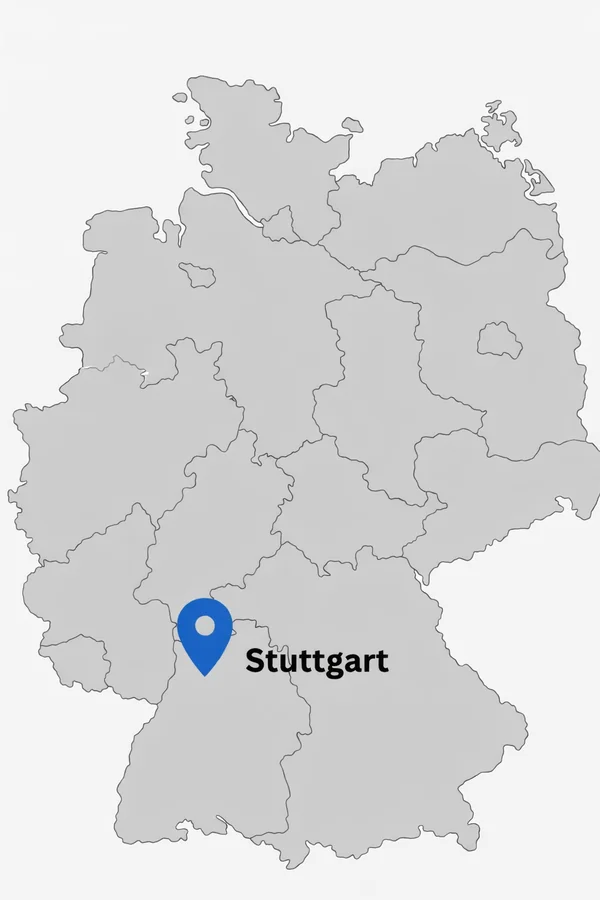
Stuttgart
Our fulfillment warehouse in Stuttgart, Germany, holds strategic importance as one of Europe’s key logistics hubs. Stuttgart provides quick access to many major cities and industrial regions across Europe, enabling businesses to deliver to customers swiftly both within Germany and throughout the continent. Additionally, its robust road and rail infrastructure reduces costs and creates a more efficient distribution network. This fulfillment center offers unique opportunities for e-commerce companies to optimize their supply chains, enhance delivery times, improve inventory management, and boost customer satisfaction.
With our Stuttgart warehouse’s access to Germany’s major transportation networks, you can benefit from faster deliveries and lower shipping costs. This gives your business a competitive edge and helps build stronger market positioning.
In our Stuttgart warehouse, there are storage areas divided into sections for shelves, pallets, and small products. Thanks to our storage options configured according to different product types, operations are carried out efficiently and in an organized manner.
Fashion, Accessories, Cosmetics, Electronics, Home Goods, FMCG
Why Should You Work with fiCommerce in Germany?
We manage the entire order fulfillment process for every e-commerce business. Whether you own an online store, are a marketplace seller, or sell through multiple online channels, we are here to support you with our professional fulfillment services.
Strategic Location
Modern Warehouse
Experienced Team
Solution-Oriented Approach
How Does fiCommerce Germany Fulfillment Work?
1. Shipping from Turkey to Our Germany Warehouse
2. Storage & Order Processing
3. Order Delivery
4. Return Management
E-Export Advantages
Customs & VAT Advantages
Easy Returns Management
Fast Delivery
Government Incentives
Lower Shipping Costs
fiCommerce X Marketplaces
Centralized Inventory Management
Sell across all sales channels from a single inventory pool without being restricted by channel-based limits.
Integration Variety
With multiple integration options, you can choose the solution that best fits your business model.
Direct Communication with Marketplaces
Our integration support teams communicate directly with marketplace contacts to ensure seamless operational continuity.
Marketplace Store Setup & Management
Your marketplace store’s technical setup, integration, and operational management are handled centrally.
Operational Flexibility
A flexible operational infrastructure that quickly adapts to businesses of all sizes, from small to large scale.
Product-Specific Storage Solutions
Suitable storage infrastructure for all types of inventory, regardless of product type, category, or specific requirements.
Our Cargo Integrations in Germany


Boost Your E-Commerce Sales in Germany!
Contact us to learn more about our fulfillment services in Germany or fill out the form to receive a quote.
Our expert team will assess your needs and provide tailored solutions for your business
Frequently Asked Questions
Here you can find answers to the most frequently asked questions about fiCommerce's fulfillment services in Germany.
Obtaining fulfillment services in Germany helps e-commerce businesses operate efficiently and swiftly in both Germany and Europe, enhance customer satisfaction, and gain a competitive advantage.
With the new EU regulations, low-value e-commerce shipments originating from outside the EU will be subject to additional customs duties. By holding stock in Germany and shipping from within the EU, these extra costs can be avoided while delivery times are shortened and competitiveness is strengthened.
As fiCommerce, we successfully manage this process in Germany and provide a strong competitive advantage in this field.
If you are considering entering the e-commerce market in Germany, it is essential to understand the habits of local consumers and offer product options accordingly. If you are already running an e-commerce business and wish to expand to Germany, you must thoroughly review the necessary legal procedures, meet the requirements of marketplaces to become a seller, and establish your warehousing and logistics processes. Instead of dealing with these details yourself, you can benefit from our end-to-end fulfillment service by contacting the fiCommerce team, which can handle all these processes on your behalf.
The product categories eligible for fulfillment services in Germany align with those most preferred by consumers for online shopping, including fashion, accessories, cosmetics, electronics, home products, and FMCG (Fast-Moving Consumer Goods).
A fulfillment service process in Germany typically includes the following steps:
- Goods Receiving and Storage: The business receives and stores the products it supplies. Products are usually labeled with a barcode or similar identifier and recorded in the inventory system.
- Order Receipt: Customers place orders via online platforms or other sales channels. These orders are automatically or manually recorded in the business system.
- Order Preparation and Packaging: When an order is received, warehouse staff pick up the relevant products. The items are then properly packaged for shipment to the customer. Packaging is typically tailored to the preferred shipping method.
- Labeling and Shipping Preparation: Packages are labeled with shipping addresses and other necessary details. Additionally, required shipping documents are prepared, and packages are made ready for delivery to the courier.
- Cargo Delivery: Packages are handed over to the selected courier company. The courier initiates the logistics process to deliver the packages to customers. During this stage, tracking numbers are provided to customers.
- Customer Support: Customer support is provided throughout the process, from order placement to delivery. Customer inquiries are addressed, order statuses are shared, and any issues are resolved.
- Return Management: Returned products are inspected to determine if they are ready for resale. The process is managed in accordance with your return policy.
Positioning inventory close to demand, selecting region-specific carriers, and optimizing cut-off times are highly effective. In addition, keeping return flows within the EU shortens the “return-to-resale” cycle and increases stock efficiency.
In German warehouse operations, product, location, and package labels should be defined under a single structure in compliance with GS1 standards. SKU/GTIN barcodes, shelf and location labels, and carton/package labels should be centrally managed through the WMS. If marketplaces or sales channels require specific label formats, these differences should be automatically generated through rule-based automation. This approach minimizes operational errors and ensures international compliance.
Split shipment is used to maintain delivery SLAs when inventory is stored in different warehouses or when products are not ready at the same time. When managed correctly, it can shorten delivery times. As a general rule, if items can be dispatched on the same day, split shipment is preferred; if dispatch dates differ, consolidated shipping provides a better customer experience.
Key metrics include on-time delivery, first-attempt delivery success, damage/loss rates, reasons for failed deliveries, and compensation resolution times. For EU cross-border routes, country-based delivery and delay analysis is also essential.
Picking efficiency is increased by applying the right combination of batch, zone, cluster, and wave picking methods based on order volume and warehouse layout. ABC slotting places fast-moving products in easily accessible locations, reducing walking distance and labor cost per order. When supported by a robust WMS, these methods improve speed, accuracy, and operational scalability.
Checks include product integrity, completeness of accessories and parts, packaging condition, and category-specific controls such as hygiene or cosmetic standards. Based on these checks, a resale suitability grade (A/B/C) is assigned. Supporting decisions with photos or evidence helps reduce potential disputes.
Without address validation and format normalization, labeling errors increase significantly. Automated address verification and carrier rule sets help reduce “incomplete address” exceptions.
Stock accuracy improves when inbound verification, mandatory barcode scanning during picking, weight checks during packing, and regular cycle counts are combined. Returns and bundle processes should also be monitored separately.
Germany-based fulfillment reduces late shipment rates through shorter transit times and more predictable delivery SLAs. Strong synchronization between warehouse, inventory, and order systems, along with real-time exception management, minimizes stock-related cancellations. Integration with local carriers such as DHL, DPD, and Hermes further improves delivery success, strengthening store ratings and marketplace performance.
ETGB (Electronic Trade Customs Declaration) enables all customs declaration processes for shipments transported by road or air cargo to be completed electronically.
To benefit from ETGB:
The shipment value must be below the legally defined limits.
A commercial invoice and required product information must be prepared.
Customs procedures are completed electronically.
ETGB provides:
Faster processes compared to traditional export
Lower costs
Reduced paperwork
Orders received by our German warehouse are dispatched within 2 business days, provided the items are in stock. This enables fast and competitive delivery times across Europe.