
Inventory is the “engine room” of fulfillment. Even with fast carriers and a great warehouse team, poor inventory management in fulfillment leads to missed delivery promises, split shipments, higher support tickets, and margin leakage. When stock data is accurate and decision-ready, fulfillment becomes predictable: orders flow smoothly, replenishment happens on time, and customer experience improves without constant firefighting.
For online stores, fulfillment stock management is not only about counting units—it’s about aligning demand, supply, and warehouse execution. In this guide, you’ll learn practical stock management strategies, how to choose the right inventory model, how AI and analytics improve accuracy, and which KPIs matter most. For a broader view of fulfillment operations and models, you can also explore our fulfillment page.

Table of Contents
Understanding Inventory Management in Fulfillment Operations
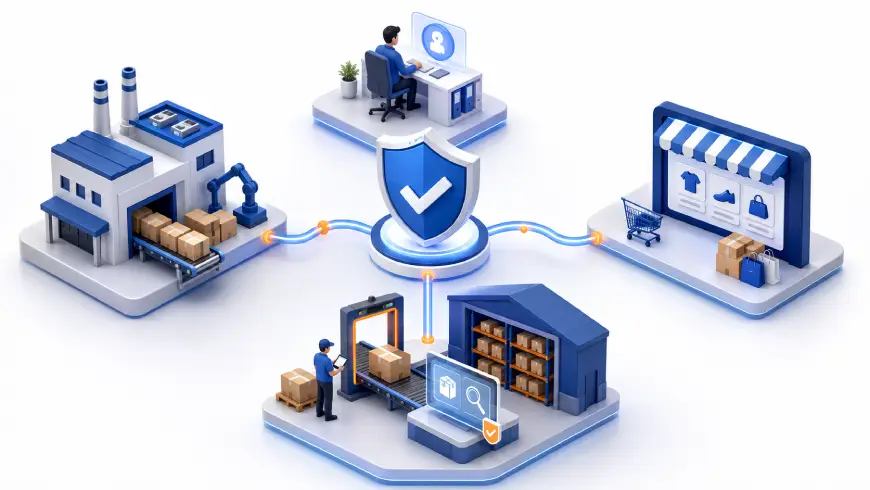
The inventory management process in fulfillment connects three moving parts: your storefront demand, your physical stock, and your warehouse execution. When these stay synchronized, the order fulfillment workflow becomes faster and more accurate—items are available when promised, picks happen without substitutions, and shipments leave on schedule.
In practice, the biggest differentiator is inventory visibility. Visibility means you can trust what the system shows across channels, locations, and statuses (available, reserved, inbound, damaged, returned). This improves supply chain coordination because purchasing, marketing, and warehouse teams work from the same “single source of truth.”
Why Inventory Management Matters in E-commerce Fulfillment
In e-commerce fulfillment efficiency, inventory accuracy directly impacts speed and cost. If the system says “in stock” but the bin is empty, you lose time, create exceptions, and risk cancellations. If the system says “out of stock” while units exist, you lose sales and ad spend efficiency because traffic lands on unavailable items.
It also affects order accuracy and customer satisfaction. The best warehouses still struggle if item masters are messy, barcodes are inconsistent, or locations are wrong. Strong inventory discipline reduces mispicks, prevents late shipments, and protects your brand promise at the moment customers care most—delivery.
Common Inventory Challenges for Online Businesses
Most online businesses face a predictable set of inventory problems: stockouts, overstocking, and data mismatches across systems. Stockouts create lost sales and emergency replenishment costs; overstocking locks cash in slow-moving products and increases storage expense and markdown pressure.
Another common issue is warehouse inefficiency caused by poor slotting, untracked adjustments, and delayed updates from marketplaces or 3PLs. When replenishment signals arrive late, teams make reactive decisions—expediting inbound, splitting orders, or shipping from the wrong location—each adding time and cost.
Inventory Optimization Techniques
Inventory optimization is about balancing service level and cost. You want enough stock to avoid stockouts, but not so much that carrying costs and write-offs erode margins. This balance depends on demand variability, lead times, and how fast your warehouse can react when conditions change.
The most effective optimization approach combines forecasting, replenishment rules, and real-time control. When warehouse efficiency improves, you can hold less “panic inventory” because you trust replenishment triggers and operational execution. That’s why optimization is both a planning discipline and a warehouse discipline.
Implementing Demand Forecasting and Replenishment Models
Demand forecasting is the foundation of smart replenishment. Even simple models become powerful when they account for seasonality, campaigns, and channel mix. The goal is predictive stock planning: anticipating demand spikes (and dips) early enough to order, receive, and stock products before they become critical.
A good replenishment strategy turns forecasts into action: reorder points, order quantities, and supplier lead-time buffers. Seasonal categories benefit from “pre-build” plans, while steady categories benefit from rolling forecasts updated weekly. The key is consistency—forecasts that don’t influence decisions are just reports.
Using Just-in-Time (JIT) Inventory Practices
Just-in-time inventory aims to minimize stock on hand by replenishing more frequently and closer to demand. In fulfillment, JIT can reduce storage cost and dead stock, supporting lean fulfillment—less waste, less handling, and less capital tied up in inventory.
However, JIT requires reliable suppliers, stable lead times, and strong efficient stock management controls. If supplier performance is inconsistent, JIT can increase stockout risk. Many ecommerce teams use a “JIT-inspired” approach: lower base stock, plus smart safety stock for volatility.
Safety Stock and Buffer Management
Safety stock protects you from uncertainty—demand surges, supplier delays, and inbound disruptions. A strong safety stock calculation considers lead-time variability and demand variability, not just “a fixed extra percentage.” This is essential risk mitigation in logistics, especially when you scale into multiple channels.
Buffer design should be SKU-specific. Fast movers with high variability need different buffers than slow movers with stable demand. The goal is to hold buffers where they protect revenue most, while reducing buffers where they mostly create carrying cost and obsolescence risk.
Real-Time Inventory Tracking Systems
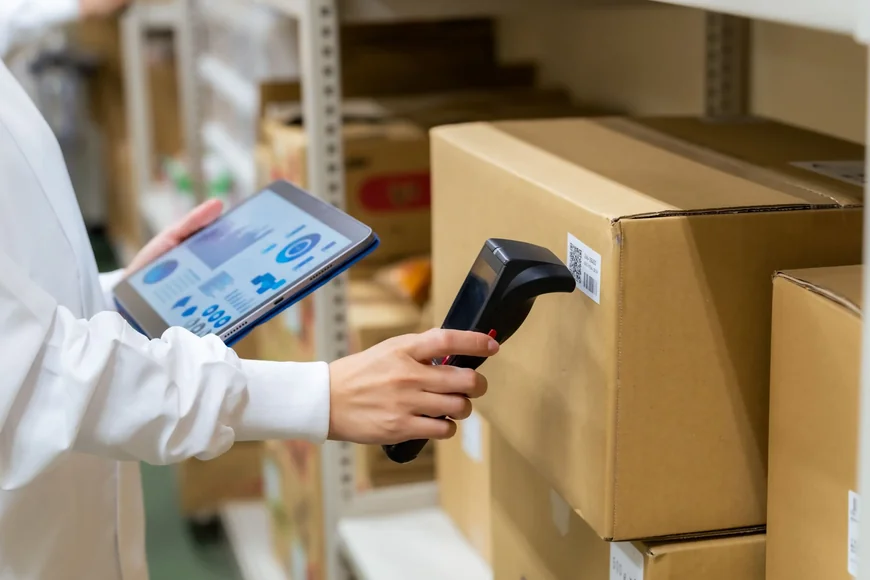
Real-time control turns inventory from “monthly accounting” into operational leverage. Inventory tracking software paired with barcode scanning and a warehouse management system (WMS) keeps the digital record aligned with the physical warehouse—every move, adjustment, and pick updates the system.
The biggest value is real-time data updates that reduce exceptions. When inventory changes instantly, you can allocate orders correctly, avoid overselling, and trigger replenishment earlier. Real-time tracking also supports faster cycle counts and more reliable audits, improving accuracy without shutting down operations.
Centralized vs Distributed Inventory Models
Choosing between centralized inventory and distributed fulfillment is a strategic decision that affects delivery speed, shipping costs, and complexity. Centralizing inventory is simpler and often cheaper to manage, while distributing inventory can reduce transit times and improve customer experience—especially in large geographies.
The trade-off is control versus speed. With multi-location inventory, you gain regional delivery advantages but introduce allocation rules, transfer decisions, and more points where data can drift. The right model depends on your order density, product mix, and customer delivery expectations.
Benefits of Centralized Inventory Management
Centralized inventory means fewer warehouses, fewer transfers, and tighter inventory control. It typically reduces operational complexity—one receiving process, one picking process, one set of inventory rules—and often leads to lower operational costs for smaller or mid-sized brands.
It also improves accuracy faster because teams manage fewer locations and fewer handoffs. If your orders are clustered near one region or you sell products with lower delivery urgency, centralized storage can be the most efficient path to stable fulfillment performance.
Benefits of Distributed Inventory Networks
Distributed inventory places stock closer to customers for faster delivery and often reduced shipping costs by shortening zones and transit distances. This is especially valuable when delivery speed is a key differentiator or when your market is geographically wide.
Distributed networks also improve resilience. If one warehouse faces capacity limits or disruptions, another location can cover demand. The challenge is ensuring consistent data, consistent processes, and smart allocation so inventory doesn’t fragment into unusable pockets.
Choosing the Right Model for Your Business
To choose the right fulfillment strategy, start with customer promise: delivery speed, shipping cost targets, and service levels. Then map your order density—where customers are—and your product characteristics (size, value, return rate). This turns the “inventory model comparison” into a business decision, not a trend decision.
A practical approach is hybrid scaling: start centralized, then add regional nodes once volume justifies it. This is classic logistics optimization: expand the network only when you can maintain accuracy, forecasting discipline, and location-level KPI management.
Using AI and Analytics in Inventory Management
AI isn’t magic—but it’s extremely useful when you have enough data and a clear operational goal. AI for inventory management helps reduce forecast error, detect anomalies, and automate routine decisions like reordering and allocation. Done right, it improves both service level and cost.
The biggest shift is moving from static rules to adaptive systems. With predictive analytics, inventory becomes proactive: you identify risk before it becomes a stockout, and you reduce excess before it becomes dead stock. The value compounds as your catalog and channels grow.
Predictive Analytics for Stock Forecasting
Predictive systems use historical sales, seasonality, promotions, and lead-time patterns to improve data-driven forecasting. Instead of one “average” demand number, you get probability ranges and risk flags that support more realistic purchasing decisions.
These predictive models are especially useful for volatile SKUs and promotional environments. They help you plan capacity, prioritize inbound receiving, and adjust reorder points dynamically—reducing last-minute expediting and fulfillment disruptions.
Machine Learning for Demand Prediction
Machine learning inventory management is most valuable when demand drivers are complex: multiple channels, regional patterns, and frequent pricing or ad changes. ML can detect relationships that simple forecasting overlooks—like how certain SKUs spike together or how stockouts in one product shift demand to substitutes.
To benefit, you need reliable inputs and disciplined feedback loops. ML works best when it learns from outcomes: forecast vs actual, lead time changes, and returns behavior. With strong real-time data processing, the system adapts faster and improves predictions over time.
Automation and Smart Reordering Systems
Smart reordering uses automation to convert signals into actions: reorder recommendations, exception alerts, and supplier-facing purchase orders. With automated restocking, teams spend less time on manual spreadsheets and more time reviewing exceptions and strategic decisions.
This is where inventory automation tools shine: they enforce consistency, reduce human error, and keep pace with scale. When paired with clear approval rules and supplier performance tracking, automation becomes a reliable control system—not a risky black box.
Integrating Inventory Management with Fulfillment Technology
Integration is the difference between “data everywhere” and “one truth.” Fulfillment software integration aligns storefront demand, warehouse execution, and purchasing decisions. Without real-time syncing, inventory drifts—creating oversells, backorders, and confusion across teams.
The goal is supply chain automation: orders flow in, inventory updates instantly, shipments update status automatically, and reporting reflects reality. This is how you reduce manual work and protect accuracy as channels, locations, and partners increase.
Connecting Inventory Systems with E-commerce Platforms
Your platform integration must be two-way: orders come in, fulfillment status and inventory updates go out. Whether you use Shopify, WooCommerce, or marketplaces, omnichannel fulfillment requires consistent SKU mapping and clear rules for reservations and backorders.
For example, “Shopify integration” and “WooCommerce inventory sync” aren’t just connectors—they’re governance. You need to define which system is authoritative for inventory, how frequently updates occur, and how exceptions are handled when data conflicts.
Role of Warehouse Management Systems (WMS)
A WMS software is where inventory accuracy becomes operational. WMS enforces scanning, location discipline, picking logic, and cycle counting workflows. This improves order accuracy improvement because it reduces mispicks, wrong-bin grabs, and untracked adjustments.
WMS also supports inventory tracking automation at scale: batch picking, wave planning, replenishment tasks, and exception management. If you’re serious about fulfillment performance, WMS is usually the system that turns “inventory theory” into day-to-day reliability.
Using Cloud-Based Inventory Management Tools
Cloud tools enable faster deployment, easier integrations, and multi-site visibility—especially valuable for distributed networks and remote teams. Cloud inventory systems and SaaS logistics platforms typically offer API connectivity, automated updates, and scalable reporting without heavy infrastructure overhead.
They also support modern workflows: multiple warehouses, 3PL integration, real-time dashboards, and role-based access. When combined with disciplined data governance, cloud tools help you manage inventory like a living operational system—not a static database.
Measuring Inventory Performance and KPIs
Inventory work becomes effective when it’s measurable. Inventory performance metrics connect daily warehouse actions to business outcomes: service level, customer satisfaction, and cost control. Without KPIs, teams can’t tell whether accuracy improvements are real or just perceived.
KPIs also reduce subjective debates. Instead of “we think stock is off,” you track stock accuracy rate, stockout frequency, and fill rate. That clarity supports better prioritization: which SKUs need attention, which processes need training, and where automation will pay off fastest.
Key Metrics to Track in Fulfillment Operations
Start with the essentials: inventory turnover, order fill rate, stockout frequency, and carrying cost. Turnover shows whether inventory is moving efficiently; fill rate shows whether you can meet demand without delays; stockout frequency highlights risk points that damage conversion and CX.
Add accuracy metrics like cycle count variance and adjustment rates. If adjustments are frequent, something upstream is broken—receiving discipline, picking discipline, or system integration. These metrics reveal where inventory truth is being lost.
Using Analytics to Improve Decision-Making
Analytics should drive decisions, not just reporting. Logistics analytics and business intelligence help you spot patterns: recurring stockouts after campaigns, suppliers with unstable lead times, SKUs with high return-driven write-offs, or bins with frequent mispicks.
When analytics are connected to actions—like changing reorder points, improving slotting, or tightening scanning controls—you get continuous improvement. This is how “inventory management in fulfillment” becomes a growth enabler, not a constant operational headache.
Benchmarking and Continuous Optimization
Benchmarking helps you set realistic targets and identify gaps. Compare your turnover and stockout rates to your past performance first—internal benchmarking is often more actionable than chasing generic industry averages. Then segment by category, channel, and warehouse to find where improvements matter most.
Continuous optimization means regular review cycles: weekly exceptions, monthly KPI reviews, quarterly model adjustments. This is “fulfillment best practices” in action—small, consistent improvements that compound into faster delivery, fewer errors, and healthier margins.
Future of Inventory Management in Fulfillment
The future is moving toward predictive, automated, and sustainability-aware operations. AI logistics and advanced sensing will make inventory decisions faster and more precise, while warehouses evolve toward more automation and higher data integrity. The goal is resilient fulfillment: fewer disruptions, fewer manual interventions, and better customer outcomes.
At the same time, sustainability pressures are shaping inventory and warehousing decisions—less waste, fewer unnecessary shipments, and smarter packaging and routing. Future-ready teams treat inventory as both a performance system and a responsibility system.
Robotics and Automation in Warehouses
Warehouse automation—from conveyor systems to warehouse robots and automated picking systems—reduces travel time, boosts throughput, and improves consistency. When paired with accurate inventory data, robotics becomes more effective because the system can trust location and availability information.
The real win is stability: automation reduces variance. Lower variance means you can plan labor better, deliver more reliably, and scale without proportional cost increases—especially during seasonal peaks.
Sustainable Inventory Practices
Green logistics and eco-friendly warehousing are increasingly tied to efficiency. Better forecasting reduces waste and write-offs; better placement reduces split shipments; better returns routing reduces unnecessary transport. Sustainability often overlaps with cost control—less waste generally means higher margin.
Sustainable inventory practices also include smarter packaging decisions, optimized storage density, and responsible end-of-life handling (refurb, resell, recycle). As customer expectations rise, sustainable inventory becomes part of brand trust and operational excellence.
Predictive Fulfillment Networks
The next evolution is predictive logistics across a network: dynamic placement of inventory, proactive transfers, and real-time allocation based on demand signals. Instead of static safety stocks everywhere, systems will plan inventory where it’s likely to be needed—minimizing transit times and reducing excess.
This “AI-powered fulfillment planning” moves companies from reactive replenishment to anticipatory operations. If you build strong data foundations today—clean SKUs, reliable integrations, disciplined scanning—you’re positioning your fulfillment to benefit from the next generation of predictive, dynamic warehousing and inventory control.
External reference (concept overview): If you want a quick, neutral definition and context of inventory management, see Inventory management.