
As e-commerce grows, customer expectations rise with it: faster delivery, fewer errors, real-time tracking, and painless returns. Many brands start by fulfilling orders in-house, but once volume increases, fulfillment quickly becomes a complex operation that demands warehouse space, staffing, inventory control, carrier management, and constant process improvement. That complexity is why e-commerce fulfillment outsourcing has become a strategic move—not just an operational one.
Outsourcing fulfillment means partnering with a third-party provider (often a 3PL) to store inventory, pick and pack orders, ship parcels, manage tracking, and sometimes handle returns. For many brands, the decision comes down to this: build logistics as a core capability, or partner with specialists and focus internal resources on growth. Below is a complete guide on why e-commerce brands outsource fulfillment, the benefits and risks, and how to choose the right partner.
Table of Contents
Understanding Fulfillment Outsourcing
Fulfillment outsourcing is the process of delegating your warehouse and order-fulfillment operations to an external provider. Instead of running your own facility, you send inventory to a fulfillment center where the provider handles day-to-day operations based on your order flow and service requirements.
This model is especially attractive for brands that sell on multiple channels (Shopify, marketplaces, social commerce) and need a consistent order-to-delivery process without building warehouse infrastructure from scratch.
The Growing Demand for Fulfillment Providers
The demand for fulfillment providers is rising because e-commerce growth increases operational complexity. More orders means more pick/pack tasks, higher risk of errors, greater carrier volume, and a larger customer support burden related to deliveries. At the same time, customers expect short delivery windows and constant visibility.
Fulfillment providers have scaled alongside this trend by building networks of warehouses, standardized processes, and technology stacks that individual brands would struggle to replicate quickly. As a result, logistics outsourcing is no longer seen as a “backup plan”—it’s a mainstream strategy for competing on speed and reliability.
How Outsourcing Fulfillment Works Step by Step
Outsourcing fulfillment typically follows a predictable workflow. First, you send inventory to the provider’s warehouse. Items are received, counted, labeled (if required), and placed into storage locations. Next, your store or sales channels connect to the provider’s system, so orders can flow automatically as customers buy.
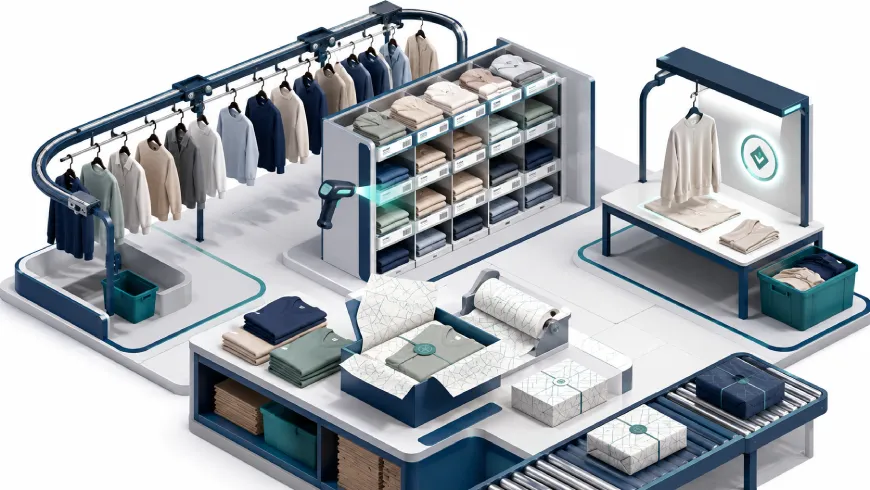
When an order comes in, the provider picks the items, packs them according to your rules, generates shipping labels, and hands the parcel to the carrier. Tracking updates are pushed back to your platform and shared with the customer. Depending on your contract, the provider may also handle returns by receiving items, inspecting them, restocking, and triggering refunds or exchanges through your system.
Advantages of Third-party Fulfillment Services
A good 3PL partnership can improve cost structure, speed, accuracy, and scalability—often all at once. But the true value is consistency: turning fulfillment into a repeatable system rather than a daily firefight.
Reduced Operational Costs
Operating your own warehouse often means fixed overhead: rent, equipment, utilities, insurance, and a permanent labor base. When order volume fluctuates, those fixed costs can become inefficient. With outsourced fulfillment, you typically pay based on usage—storage, picks, packs, and shipping services—so costs can align more closely with demand.
Outsourcing can also reduce hidden operational costs like hiring and training, process design, carrier negotiations, and managing peak-season overtime. The result is often a leaner fulfillment model with fewer overhead surprises.
Improved Shipping Speed and Accuracy
Experienced providers optimize warehouse layout, picking methods, packing standards, and carrier handoffs. This increases accuracy and reduces common failures like mispicks, wrong labels, and damaged parcels. Many 3PLs also offer better delivery speed due to established carrier relationships and multiple distribution points.
Speed is not just about getting packages out quickly—it’s about hitting promises consistently. Reliable order processing plus real-time tracking improves customer trust and lowers support tickets.
Scalability During Peak Seasons
Peak seasons are where in-house fulfillment often breaks: labor shortages, packing backlogs, missed cutoffs, and shipping delays. A fulfillment provider can scale more easily because they operate with flexible staffing models, standardized workflows, and infrastructure designed for volume spikes.
Instead of scrambling to hire seasonal workers and expand space, brands can rely on the provider’s capacity planning. This protects the customer experience when demand is highest.
Access to Expertise and Technology
Many brands underestimate the operational knowledge required to run fulfillment well. Providers bring proven SOPs, quality control routines, inventory counting processes, and exception-handling playbooks. They also offer technology that would be expensive to build internally: WMS capabilities, dashboards, real-time visibility, scanning verification, and automated workflows.
This access to fulfillment technology improves operational maturity faster than internal trial-and-error—especially for growing brands.
Focus on Core Business Growth
Outsourcing fulfillment frees internal teams to focus on what actually differentiates the brand: product, marketing, pricing strategy, customer experience, and growth channels. Instead of spending leadership time on warehouse issues and carrier disputes, teams can invest in growth initiatives that increase revenue and profitability.
For many businesses, this strategic focus is the biggest benefit—because fulfillment is essential, but it doesn’t always need to be the company’s core competency.
Key Factors to Consider Before Outsourcing
Outsourcing is not automatically a win. The outcome depends on partner selection, contract structure, integration quality, and operational fit. Before switching, evaluate how the partnership will perform in real-world conditions, not just in a sales pitch.
Analyzing Costs and Pricing Models
Fulfillment pricing often includes multiple components: storage fees, pick/pack fees, packaging materials, special handling, returns processing, and account management. Some providers charge per order; others separate each activity. Hidden costs can appear in areas like kitting, inserts, oversized products, or high SKU complexity.
To compare providers fairly, model your cost based on your real order profile: average items per order, peak volume, return rate, SKU dimensions, and destination mix. A cheaper per-order price can still be expensive if add-on fees are frequent.
Evaluating Reliability and Reputation
Reliability is the foundation of outsourced fulfillment. Ask for measurable performance indicators: order accuracy rate, on-time dispatch rate, inventory accuracy, and returns processing time. Review SLAs carefully—especially how exceptions are handled and what happens when performance falls below target.
Reputation matters, but not in a generic way. Look for references in similar industries and similar order complexity. A provider excellent at single-SKU cosmetics may struggle with multi-item bundles, fragile products, or regulated categories.
Checking Technology and Integration Capabilities
Integration quality determines how smooth the partnership feels day-to-day. Orders, cancellations, address changes, and inventory updates must sync reliably. The provider’s system should connect cleanly to your store and support your workflows across channels.
Ask how they handle edge cases: partial shipments, split orders, backorders, exchanges, and multi-warehouse logic. A technically “available” integration is not enough—what matters is operational compatibility.
Understanding Location and Shipping Zones
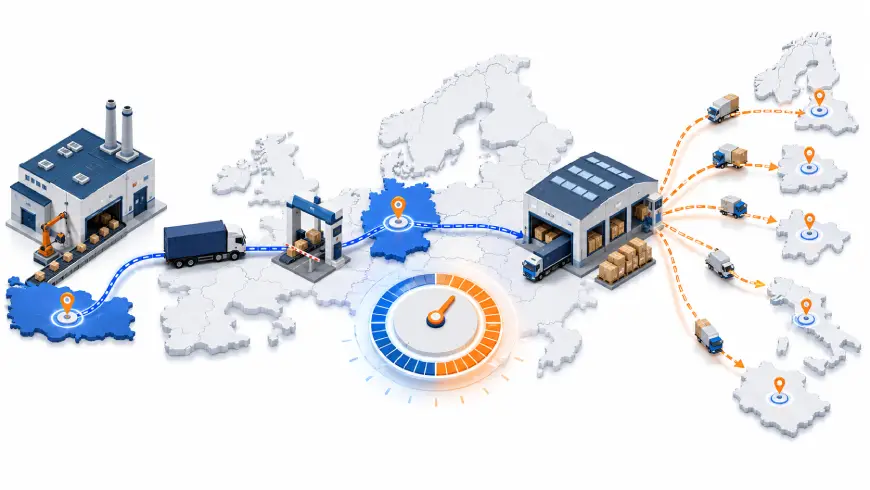
Warehouse location impacts delivery speed, shipping cost, and return efficiency. If most customers are in one region, a warehouse close to that demand reduces transit time and costs. If you ship internationally, location strategy becomes even more important due to customs, duties, and carrier networks.
Evaluate how the provider’s network maps to your customer distribution and whether they can support future expansion without rebuilding your logistics from scratch.
Reviewing Customer Support and Communication
A great provider isn’t defined by never having issues—it’s defined by how fast and transparently they resolve them. Communication and support should be structured: escalation paths, response-time expectations, and clear reporting.
Your customer support team also needs visibility. If customers ask “Where is my order?”, you must be able to answer quickly with accurate status—not vague guesses.
Potential Risks of Outsourcing Fulfillment
Outsourcing introduces dependency. If the partner fails, you feel the impact immediately. That’s why risk awareness and controls are essential before signing a contract.
Loss of Direct Control Over Operations
When fulfillment is internal, you can change processes quickly. With a 3PL, changes often require negotiation, testing, and sometimes additional fees. You also lose direct oversight over daily execution.
To reduce this risk, define operating standards clearly, require regular reporting, and establish structured review meetings. Control doesn’t disappear—but it becomes contractual and collaborative rather than direct.
Miscommunication and Service Delays
Miscommunication happens when responsibilities are unclear or systems don’t sync. For example, marketing launches a promotion but doesn’t inform the 3PL, causing inventory shortages or labor mismatch. Or product changes are introduced without updating SKU data, leading to picking errors.
Clear workflows, shared calendars, and robust integration reduce this risk. The partnership must be managed as an operational system, not a “set-and-forget” service.
Data Security and Privacy Concerns
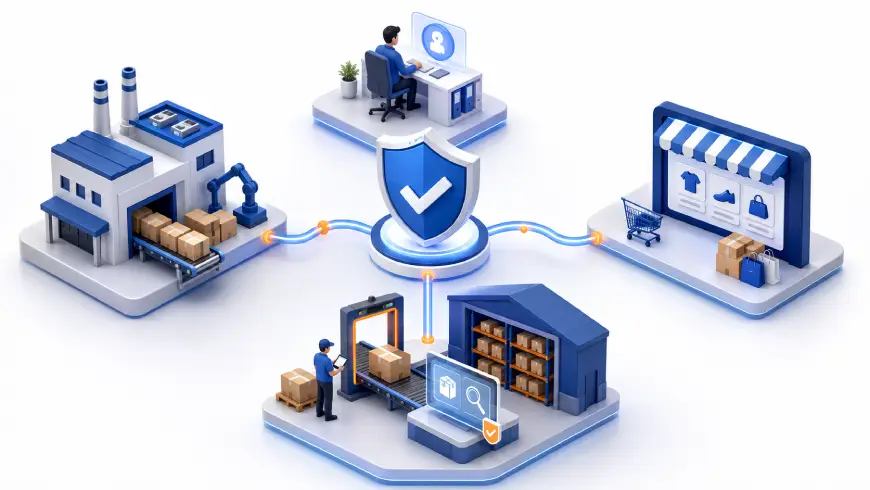
Outsourcing means customer and order data flows through external systems. Providers must meet data protection requirements and maintain secure access control. Ask about security measures, audit practices, user permissions, and how they handle sensitive customer information.
Security is not only technical. Process security matters too: who can access data, how changes are approved, and how incidents are reported.
How to Choose the Right Fulfillment Partner
Choosing the right provider is less about finding the biggest company and more about finding the best operational fit for your order profile, product type, and growth goals.
Define Your Business Needs and Goals
Start with clarity. Define your current reality and your target future state: order volume, peak season patterns, SKU complexity, storage needs, delivery promises, and returns expectations. Also define what matters most—speed, cost, accuracy, international shipping, customization, or premium packaging.
If you don’t define success, you’ll end up evaluating providers based on generic claims instead of measurable fit.
Compare Multiple Providers
Always compare multiple providers using the same evaluation framework. Use consistent scenarios: average order, peak order, fragile product, return flow, and customer support escalation. Ask for realistic timelines and performance benchmarks—not best-case promises.
The goal is to identify operational maturity: how they think, how they measure, and how they handle exceptions.
Request a Trial or Demo Service
A pilot or trial reveals what sales decks can’t: receiving accuracy, integration stability, packing quality, tracking reliability, and communication speed. Even a short pilot helps you catch friction early.
If a full pilot isn’t possible, request a detailed walkthrough of their workflow and reporting—then validate it with references.
Long-term Benefits of Partnering with a Fulfillment Provider
When the partnership works, the long-term gains go beyond day-to-day shipping. It becomes an operational advantage that supports predictable growth.
Continuous Cost Optimization
As volume grows, providers can often negotiate better carrier rates, optimize packaging, improve pick paths, and reduce damage. Those improvements lower the cost per order over time. A strong partner will proactively propose efficiency upgrades rather than waiting for you to complain.
Cost optimization is ongoing. The best partnerships treat it as a shared goal with regular reviews and metrics.
Enhanced Customer Experience
Customer experience improves when fulfillment is consistent: accurate orders, reliable delivery windows, clear tracking updates, and fast returns processing. Consistency reduces support tickets and increases satisfaction.
Over time, delivery reliability becomes part of brand trust. Customers buy again because they know what to expect.
Competitive Advantage in E-commerce
Fast and reliable fulfillment can be a competitive advantage—especially in markets where delivery expectations are high. When your operation can scale without breaking, you can run promotions confidently, expand channels, and enter new regions.
Operational strength becomes a growth lever, not a limitation.
Future of Outsourced Fulfillment
Outsourced fulfillment is evolving quickly, driven by automation, AI, sustainability pressure, and global commerce expansion.
Technology-driven Fulfillment Solutions
3PLs are adopting warehouse automation, smarter WMS features, advanced analytics, and AI-driven exception management. Over time, this improves forecasting, inventory placement, and delivery performance.
For brands, this means access to innovation without building everything internally—if the provider invests in technology that actually improves outcomes.
Eco-friendly and Sustainable Logistics
Sustainability is becoming part of fulfillment strategy. Providers are adopting recyclable packaging options, right-sized packaging, lower-waste packing methods, and emissions-conscious shipping choices.
Brands that align with eco-friendly logistics can reduce waste, protect margin (through fewer damages and re-ships), and strengthen customer trust.
Global Expansion Through 3PL Networks
International growth is difficult without logistics infrastructure. 3PL networks help brands enter new markets through regional warehouses, cross-border shipping programs, and local carrier relationships.
A strong provider network can reduce delivery times, improve reliability, and make global expansion operationally feasible without creating multiple internal warehouses.