
At every stage in the development of an e-commerce business there comes a moment when a single warehouse is no longer sufficient. As order volumes increase, the customer base extends over a wider geographical area and delivery expectations become more demanding – leading to higher costs because of the speed and shipping requirements of managing all operations from one central site.
Multi-warehouse fulfilment is the way in which operations are able to go beyond that limit, but it is also a system that increases operational complexity. Inventory is not now a single pool; for each order there has to be a decision as to which warehouse ships it. Data synchronisation between the various locations becomes a matter of great importance. If properly designed, a multi-warehouse network reduces delivery times, spreads the risk, and enables growth. If poorly designed, it leads to inconsistent stock levels, unnecessary costs, and disappointed customers.
The guide explains how to plan out multi-warehouse fulfilment, the criteria you should use when making your decisions, and the mistakes that most frequently cause distributed operations to fail.
Table of Contents
What Multi-Warehouse Fulfillment Means
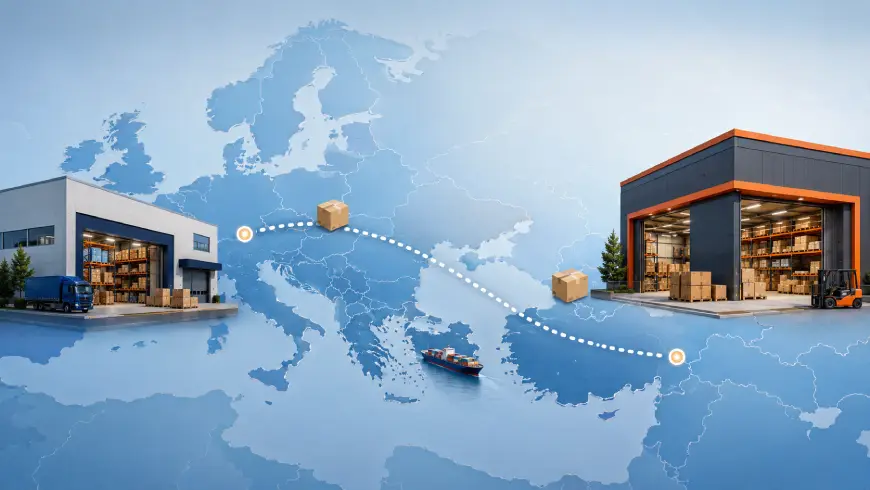
Multi-warehouse fulfillment involves keeping goods in multiple physical locations and then fulfilling orders by sending them framongse various locations. The warehouses can be in the same city, in different areas of a single country, or — more and more often — in different countries altogether.
How It Differs from a Single-Warehouse Setup
In a single-warehouse system the principle is simple: all the stock is kept in one location, each order is dispatched from that one place, and the stock figure consists of a single figure. This simplicity is a real benefit when the operation is on a small or mid-sized scale since it involves low management overhead, does not have any data-consistency problems, and has processes which are geared towards one site.
A multi-warehouse system does away with that simplicity in favour of a number of new decisions. For example, which products are kept in which warehouse and in what amounts? When an order comes in, which warehouse is responsible for filling it? If the stock at one warehouse falls low, do you transfer it from another warehouse or restock that warehouse directly from the supplier? And which stock do the various sales channels show as being ‘available’?
All of these involve decisions that are absent in the single-warehouse approach; if you move to a multi-warehouse system without putting in place the necessary infrastructure and procedures to deal with them systematically, the speed advantage you are seeking will be outweighed by the cost of the complexity you have introduced.
Which Brands Benefit from It Most
It is not the case that every brand should adopt a multi-warehouse system. The following three factors decide if it is suitable:
Because customers are spread out over a large area, a second warehouse should be considered if a significant proportion of orders come from regions that your single warehouse cannot serve quickly and this proportion is increasing.
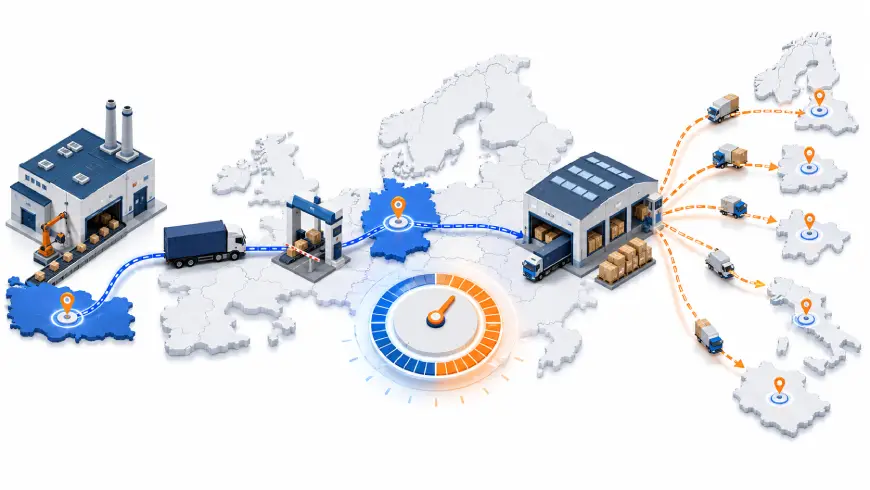
When it comes to international sales, multi-warehouse distribution is usually not an option but a necessity. Instead of sending each order separately through customs, it is possible to keep large quantities of stock in a warehouse located in the target market and to fill orders locally, thereby reducing both the delivery time and the cost. This is the reason why the company is expanding its fulfilment facilities from Turkey into the European markets, since having a warehouse based in Europe changes a cross-border shipment that normally takes five to seven days into one that takes one to two days.
The pressure to deliver quickly means that brands offering same-day or next-day delivery must have their stock located near customers; this is not something that can be addressed at a later stage but is instead a necessary structural requirement.
Risk management involves operations that rely on a single warehouse having a single point of failure—whether it’s a fire, a flood, a system outage, or a regional disruption, all of these events bring everything to a standstill. For brands which have passed a certain level of volume, having multiple warehouses acts as a form of continuity insurance.
On the other hand, brands that have a lower daily order volume, a customer base concentrated in a particular geographic area, or one that focuses on a single market may discover that the complexity involved in using multiple warehouses exceeds any advantages it offers; in such cases,the appropriate course of action is generally to improve the single warehouse they already have.
Benefits of Multi-Warehouse Operations
Holding Inventory Closer to Customers
The greatest advantage is the reduction in delivery time. The nearer the stock is to the customer, the shorter the shipping distance becomes — and a shorter distance results in both quicker delivery and lower shipping costs.
This benefit becomes more significant when it comes to international operations. If an order is shipped directly from Turkey to Germany it takes 4 to 7 business days; if the order is shipped from a warehouse in Germany it is delivered within 1 to 2 days. Since the German customer expects delivery in 2 to 3 days, this difference is a conversion factor which has a direct impact on sales, not just a small improvement.
The same reasoning holds true in the domestic case: having two warehouses which serve different areas results in a shorter average delivery time than having a single central warehouse, and it creates a system less vulnerable to the regional performance shortfalls of any one carrier.
Reducing Operational Risk
A single warehouse represents a single point of failure since any disruption there—whether it’s a natural disaster, a fire, a prolonged power outage, a system failure, or even a serious labor strike or road closure—immediately brings the whole operation to a standstill.
The risk can be spread out using a multi-warehouse system. If there’s an issue at one site, orders can be temporarily sent to another; since the essential SKUs are kept at both locations, this flexibility becomes a reality. It’s a type of arrangement that seems unnecessary right up until the day it proves its value.
There is another aspect of risk distribution: capacity flexibility. If the capacity of one warehouse is used up during a campaign period, the excess volume can be transferred to another—something which is absent in the case of a single-warehouse arrangement.
Planning Inventory Allocation Across Warehouses
The most important—和 constantly managed—choice in the case of a multi-warehouse system is inventory allocation, that is, which product, in which warehouse, and in what quantity?
Placing Stock Based on Regional Demand
The main input used in the allocation process is regional demand data; by examining the orders for each warehouse’s serving region at the level of individual SKUs it is possible to determine which products should be stocked and to what depth at that warehouse.
The wrong approach in this situation is to apply general sales figures equally to all warehouses. Demand patterns vary from region to region: a product that sells quickly in the west may sell slowly in the east; the range of products in an export market can differ significantly from that in the domestic market.
It is common for a particular SKU to be a slow seller in one market and a fast seller in another when there are multiple warehouses. Stock planning for each warehouse should be based on sales data specific to that warehouse’s region, rather than on a central average.
A good rule to follow in practice is to keep in full stock in that warehouse all the SKUs which account for about 80% of sales in the area served by the warehouse; instead, store the remaining items at one central location and send them out from that place when required. This approach strikes a balance between the capital cost of having every product available in all locations and the slower delivery times that result from having no stock locally.
Balancing Overstock and Stockout Risk
The use of multiple warehouses increases the risk of stock shortages: instead of having one risk of stockout there is now a separate risk of stockout and overstock at each warehouse. The total stock may appear to be sufficient even though it is concentrated in the wrong place—there will be a surplus at the warehouse in Germany while the same item is out of stock in Turkey.
The imbalance is handled by three methods. The first is to calculate safety stock on a per-warehouse basis, setting the buffer based on the warehouse’s demand rate and replenishment lead time. The second is to use realistic replenishment lead times: it may take a few days to replenish a domestic warehouse from a local supplier, whereas transferring stock from Turkey to a German warehouse takes 7 to 10 business days, including customs — hence the safety stock for the German warehouse must be based on that longer period.
The third method involves carrying out inter-warehouse balancing transfers, which consist of moving surplus from a warehouse that is overstocked to one that is in demand; yet, since such transfers involve their own costs, it is always cheaper to get the initial placement right than to make corrections later.
How Orders Should Be Routed
The core of a multi-warehouse system is the decision about order routing: for each incoming order, the system must determine which warehouse will fulfill it — automatically and in seconds each time.
Routing by Nearest Warehouse
The simplest form of routing is based on geography, namely by sending out ships from the warehouse closest to the delivery address. This reduces delivery time and, in most cases, also lowers shipping costs.
But “nearest” should be based on real carrier transit times, not straight-line distance. There are scenarios where two warehouses reach the same city via different carriers at different speeds. When routing rules are built, each warehouse. A necessary condition for geographic routing is that the product in question must actually be present in the warehouse.
If the nearest warehouse is found to be out of stock, the system must route the order to the next most suitable warehouse – and this decision must be carried out automatically. It is not feasible to select warehouses on a manual, order-by-order basis, even when the volume is low. It must run automatically. Manual per-order warehouse selection isn’t sustainable even at low volume.
Routing by Cost Efficiency
Geographic proximity is not the only consideration; the advanced routing logic also takes into account the total fulfillment cost of each order, including the shipping rate, the warehouse’s handling cost, and the balance of capacity between locations.
For instance, if an order is destined for a region that is accessible to both warehouses, the one that is a little further away but has the better carrier agreement could end up being the cheaper option. Or, if one warehouse’s capacity is being pushed during a campaign, it may be better operationally to route the order to the other one, even if this means an extra day’s transit time.
The trade-offs should be set out as fixed rules—specifically, determining when speed is the main consideration, when cost is the main consideration, and at what capacity level the routing. If such rules are defined, the system will make a consistent decisi,on for each order; but if they are not, the decisions become random, and neither speed nor cost is optimized.
System Requirements for Multi-Warehouse Fulfillment
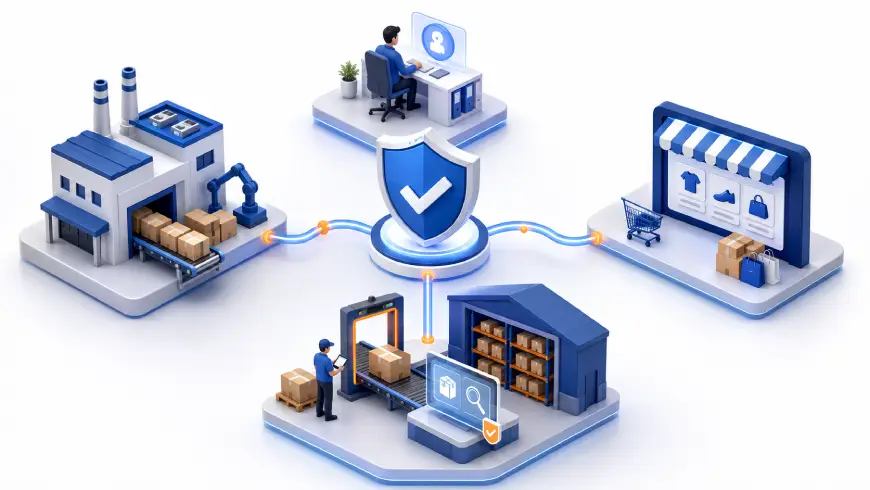
The technical backbone of a multi-warehouse setup is the system architecture that unifies every location into a single management layer. Without it, multi-warehousing degrades into isolated operations working in the dark to each other.
Real-Time Stock Visibility Across Locations
A basic requirement is that all sales channels and all managers should be able to see the stock from all warehouses on a single screen, in real time; the question ‘how many of this product are left and where?’ must be answerable within seconds using up-to-date information.
The way in which visibility is linked to sales channels is a separate design choice; for example, which stock does a marketplace display—the total stock from all warehouses or only the stock of the warehouse that serves that market? The Turkish marketplaces should show the stock from the Turkish warehouse and the European marketplaces the stock from the German warehouse, because if you instead sold against the Turkish stock on Amazon.de you would not be able to meet the delivery promise.
The mapping from channel to warehouse must be clearly defined in the integration layer; indeed, the general argument that connecting sales channels to warehouse systems is fundamental applies even more strongly in this case.
The speed of synchronization is just as important; when several channels use the same physical stock, a sale on one channel must be reflected on the others within minutes. If the synchronization takes place only once an hour, this creates a possibility of overselling during busy times.
Managing Transfers Between Warehouses
Inter-warehouse stock transfer is a routine but attention-demanding process. During transfer, a product is “in transit” — deducted from the origin warehouse, not yet received at the destination. This intermediate state must be tracked correctly in the system; otherwise, stock in transit shows as “unavailable” at both locations and sellable inventory artificially shrinks.
When it comes to international transfers, the procedure involves a customs aspect: moving stock from Turkey to a warehouse in Germany counts as an import, and as part of the transfer planning it is necessary to make a declaration, use a HS code and deal with VAT. The frequency of the transfers is something that has to be optimised: although frequent small transfers provide flexibility for stock they increase the cost per unit, whereas infrequent large transfers are more economical but raise the risk of stockouts at each warehouse. The guide mentioned provides a complete overview of how to manage a distributed warehouse operation in both markets.
Common Mistakes in Multi-Warehouse Operations
Data Inconsistencies Between Locations
The most frequent and most expensive issue in distributed operations is the discrepancy between system stock data and actual physical conditions. Although in one area the problem occurs at a single point and is therefore relatively easy to identify, when there are multiple issues, the inconsistency spreads across them, making the source of the problem difficult to locate.
Typical sources: transfer processes recorded late or incompletely in the system; returned items logged to the wrong warehouse; one location running a different or non-integrated system; and manual corrections not propagated to the other locations.
The key to the solution is single-system discipline, meaning all warehouses should use the same warehouse management system (WMS) and data model. When different sites use different systems, the integration layer between them must be real-time and bidirectional. Furthermore, cycle counts should be conducted regularly at each warehouse, with variance rates monitored at each location. It is here that a partner who provides true real-time inventory visibility across all locations demonstrates its value—by having a single panel covering all the warehouses, the fundamental cause of most drift between locations is eliminated.
Poor Routing Decisions
The second common failure area is routing rules built incorrectly or left un-updated. The symptoms: orders systematically shipping from the more distant or more expensive warehouse; one warehouse constantly overloaded while another sits idle; and split shipments — the items of a single order shipped from two warehouses in two separate parcels, which both double shipping cost and degrade the customer experience.
The split-shipment problem should be given special consideration since its solution occurs at the allocation stage—by keeping products that are frequently purchased together (as determined by basket analysis) in the same warehouse, the order can be shipped completely from a single location. The routing rule should also be designed so as to give priority to the warehouse that can fill the whole order, not instead look for the nearest warehouse for each individual item.
Routing rules should not be set and then left in place. Whenever there are changes in demand geography, new carrier agreements are concluded, and warehouse capacities change, the rules need to be reviewed—conducting a quarterly analysis of routing performance is a sensible schedule for ensuring that the rules stay in line with reality.
Approaching the Transition to Multi-Warehouse
You don’t need to construct the entire multi-warehouse fulfillment system at one time; instead, make a sound transition by first opening up a single extra warehouse in the second region or market that has the highest volume, placing there only a limited number of the best-selling SKUs, keeping the routing rules simple (that is, using geographic routing together with a stock check), and then gradually expanding the operation once it’s running smoothly.
The advantage of this approach is that the learning curve of multi-warehouse management is taken in a controlled environment. The synchronization, transfer, and routing lessons from the first warehouse pair aren’t repeated in later expansions.
For brands that are using a fulfilment partner, the key issue is whether the partner is able to handle multiple locations on a single system; a partner who has physical facilities in both Turkey and Europe and who can show two locations through a single panel with one stock view takes a large part of the technical and operational setup work off the brand and reduces the time needed to make the transition from a project which takes months to complete to one that takes only weeks.
Multi-warehouse fulfillment, set up at the right time with the right infrastructure, simultaneously strengthens delivery speed, operational resilience, and market reach. Set up at the wrong time — when volume and system maturity aren’t there yet — it becomes an unmanageable layer of complexity. The difference isn’t the number of warehouses; it’s how solidly stock visibility, routing discipline, and data consistency are built.