
TikTok is no longer just a social media platform; it has evolved into a powerful commerce ecosystem that combines content, discovery, and purchasing in one place. Especially with the TikTok Shop model, users can discover products while watching content and complete the purchase process without leaving the platform.
This structure eliminates the multi-step purchasing process in traditional e-commerce, creating a faster and more efficient sales channel for brands.
Table of Contents
TikTok Shop Growth Rates
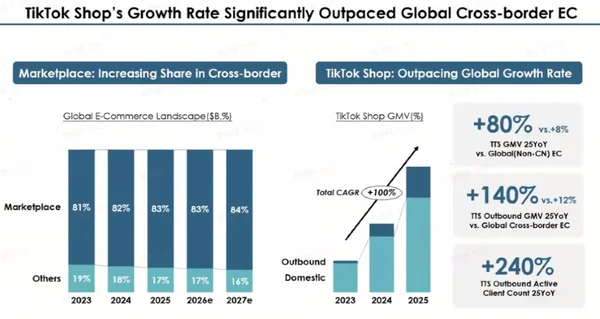
The growth rate of TikTok Shop is far above global e-commerce. While TikTok Shop GMV (Gross Merchandise Value) growth has reached 80%, global e-commerce growth remains around 8%.
On the outbound GMV (cross-border sales volume) side, TikTok Shop has grown by 140%, while global cross-border e-commerce has only grown by 12%. At the same time, a 240% increase in the number of active sellers shows how rapidly the platform is scaling.
These figures show that TikTok Shop is not only a growing channel but also a structure that is changing market dynamics.
TikTok’s Core Strength
The success of TikTok Shop is based on its content-driven sales model. In this model, the user journey is shortened, and the purchasing process becomes faster. At the same time, in-platform data is collected more accurately, leading to higher conversion rates.
TikTok users spending an average of 2.5 hours per day on the platform creates a major opportunity for brands in terms of attention and engagement. This makes TikTok Shop not just a sales channel, but also a powerful demand generation engine.
How Does TikTok Shop Work?
In TikTok Shop, products are not displayed merely as catalog items. Content, live streams, creator collaborations (influencer/producer partnerships), and in-platform campaigns become a direct part of sales. In other words, the sales strategy is not just about listing products; content strategy and operations must work together.
The TikTok Shop process generally works as follows: first, the appropriate store model is selected, then company eligibility and registration processes are completed. Afterwards, logistics and storage structures are set up, and the store registration phase begins. In other words, it’s not just about opening a store at the beginning, but building an operational model that ensures the store runs sustainably.
Therefore, the most common mistake when entering TikTok Shop is focusing only on “opening a store.” The real differentiators are fulfillment, shipping, inventory management, product flow, campaign support, and customer experience.
TikTok Shop Store Setup Process
The requirements for opening a TikTok Shop store may vary depending on the target market and store model. Especially in the registration phase, official requirements such as identity and tax verification are important in some markets. Therefore, the structure suitable for the target country should be determined at the first step.
In general, the store setup process consists of the following steps:
1. Choosing a sales model
First, you must decide which store model to proceed with. Local sales model, cross-border sales model, or TikTok-supported fulfillment structures are key here. Each model has different tax, registration, and logistics requirements.
2. Company and eligibility check
Before opening a store on TikTok Shop, company documents, tax information, and in some markets, business licenses may be required. If you do not already have a suitable company structure in the relevant market, this stage may require more planning.
3. Creating a seller account
A seller account is created for store registration. Basic business information is entered into the system, and necessary documents are uploaded.
4. Business verification and tax information
Identity verification, company verification, and tax details must be completed. If this stage is incomplete, store opening may be delayed, or the start of sales may be postponed.
5. Product upload and official account connection
After the store becomes active, products must be uploaded, category matching must be completed, and the official TikTok account must be linked to the store. This allows content, products, and sales flow to work together.
Opening a store without completing operational preparation can lead to stock, delivery, and customer satisfaction issues later. Therefore, the process should be planned end-to-end from the beginning.
Why Is Logistics Critical in TikTok Shop?
The strongest aspect of TikTok Shop is fast discovery and fast purchasing experience. However, if logistics are weak, this experience becomes unsustainable. Users may discover and purchase quickly, but if orders are shipped late, cancellations increase, or delivery performance drops, store growth slows down quickly.
In TikTok Shop operations, the following concepts must be clearly understood:
Local Shipping
Refers to sending orders through local logistics channels in the target market. This model offers advantages in faster delivery and better customer experience.
International Shipping
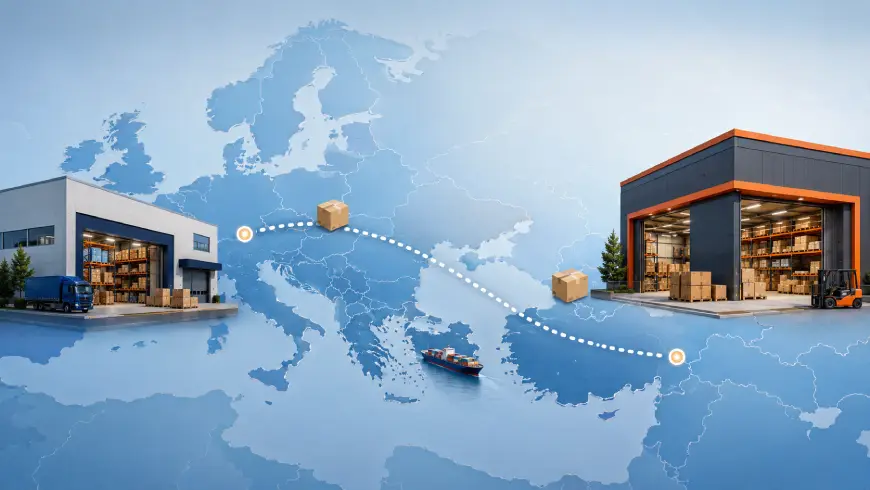
Refers to cross-border sellers shipping products from another country. In this model, transit times, customs processes, and import-export operations become much more important.
First-mile Logistics
The initial transportation step from the product’s origin to the cross-border transit process or overseas warehouse. This part is usually the seller’s responsibility.
Last-mile Logistics
The final delivery stage where the product reaches the end customer from the warehouse. This is the most critical part directly affecting customer experience.
Strong sales performance in TikTok Shop is not only driven by content but also by a solid logistics structure. Especially as order volume increases, stock management, order processing, and delivery SLAs become much more important.
3PL, 4PL, and FBT Models in TikTok Shop
There are different logistics and fulfillment models within the TikTok Shop ecosystem. Understanding these correctly directly impacts operational cost and customer experience.
What is 3PL?
Third-party logistics (3PL) is a model where storage, transportation, and distribution operations are managed by a professional logistics provider. The seller works with an external operational partner.
This structure reduces operational workload, but coordination, integration quality, and performance management remain important for the seller.
What is 4PL?
The 4PL model offers a more integrated structure. It involves managing multiple logistics resources with end-to-end planning and coordination. It is preferred especially in more complex operations.
What is FBT?
FBT (Fulfilled by TikTok) is an in-house fulfillment model where TikTok manages storage, packaging, and shipping. In this structure, the seller sends products to TikTok’s operational network, and fulfillment is handled by TikTok after the order.
Due to advantages in speed, visibility, and campaigns, FBT has become an attractive model for many brands.
Who Is TikTok Shop Suitable For?
TikTok Shop may not be equally suitable for every brand, but it offers strong opportunities for:
Brands entering new markets
Especially for companies aiming for cross-border sales, TikTok Shop can accelerate product discovery and sales potential. However, local operational setup is critical.
Categories that can sell through content
Cosmetics, personal care, fashion, accessories, lifestyle products, home goods, and trend-driven categories have higher potential, as storytelling through content increases conversion.
Brands using affiliate models
TikTok Shop is not only about opening a store but also about growing sales through creator collaborations. If your product can be demonstrated and explained, you have an advantage.
Sellers looking to scale operations
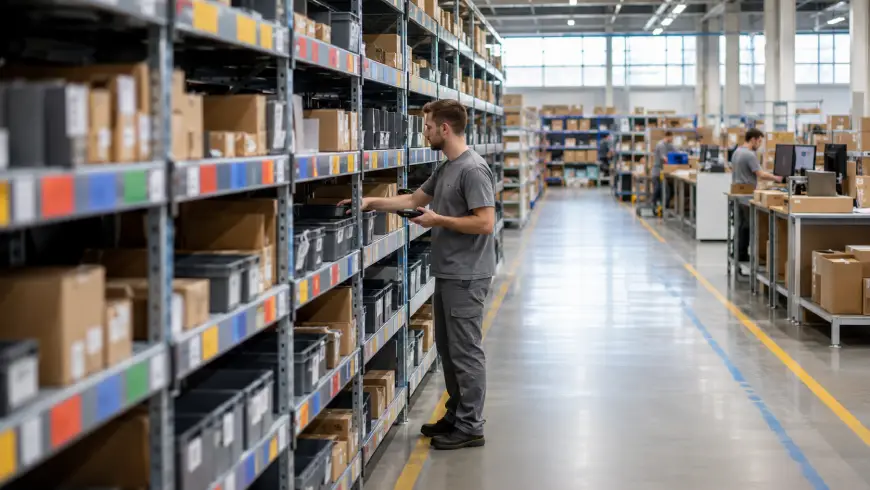
As order volume grows, the need for professional support in fulfillment and warehousing increases. Working with an expert partner instead of manual operations ensures more sustainable growth.
Conclusion
TikTok Shop is a powerful e-commerce model that combines content and commerce. However, success in this model depends not only on the sales channel but also on logistics and operational infrastructure.
With the right model selection, strong fulfillment structure, and content strategy, TikTok Shop offers a significant growth opportunity for brands.