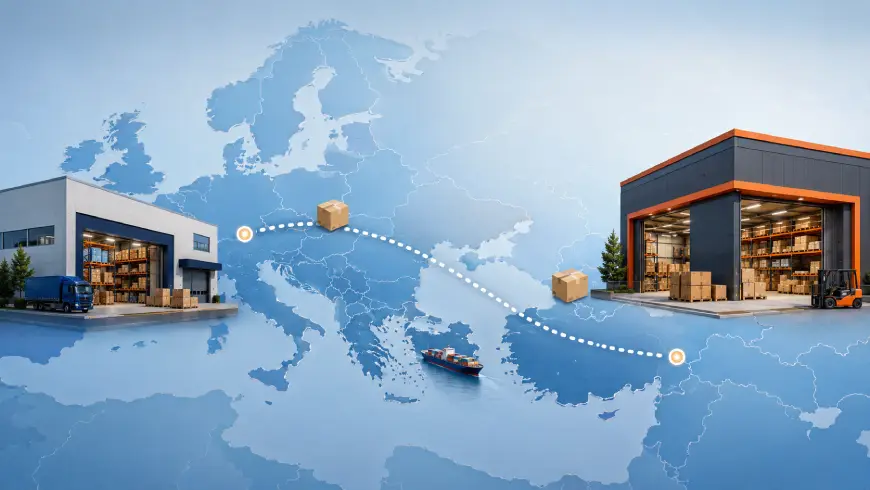
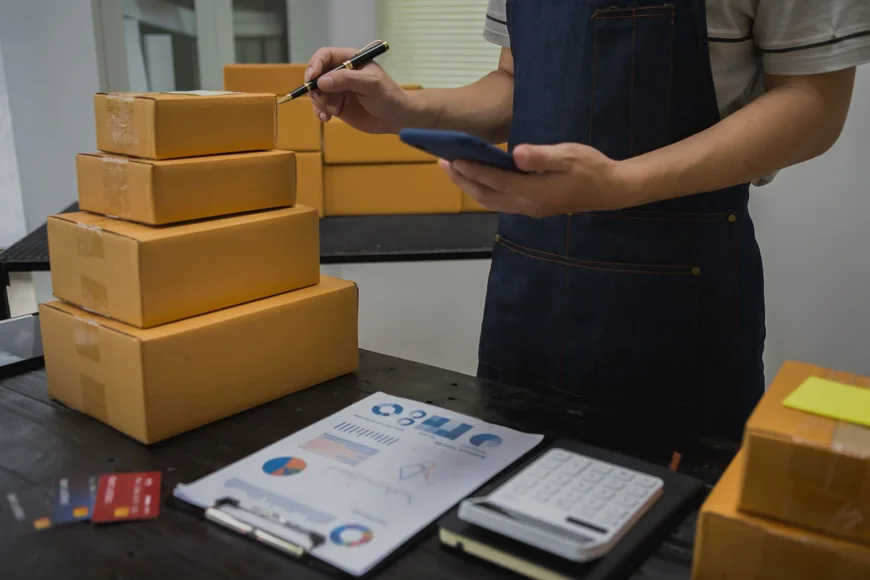

Subscription box fulfillment looks similar to standard e-commerce on the surface—pick items, pack a box, ship it—but operationally it’s a different game. The biggest difference is predictability paired with pressure: you know shipments are coming (monthly, weekly, or by billing cycle), yet you must execute large volumes in a tight window with near-zero tolerance for errors. One missed product, one labeling issue, or one delayed carrier pickup can impact thousands of customers at once.
To run recurring order fulfillment efficiently, you need an operation designed for repeatability: forecasting and scheduling, disciplined kitting workflows, reliable inventory planning, consistent packaging standards, and clear exception handling for changes, cancellations, and replacements. This guide walks through the systems and habits that make monthly box logistics scalable without sacrificing customer experience.
Table of Contents
What Makes Subscription Box Fulfillment Different?
A subscription model doesn’t just ship orders—it ships expectations. Customers anticipate the box on a specific timeframe, and delays feel more personal because the experience is recurring. Operationally, you also deal with synchronized demand: instead of orders arriving evenly over time, many shipments are released in a batch during campaign windows.
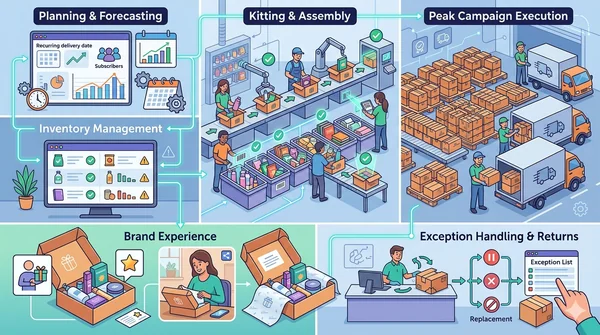
The result is that subscription operations are less about “daily throughput” and more about “campaign execution.” The best subscription teams treat each cycle like a production run: plan, prep, stage, assemble, QC, and ship.
Differences from Standard E-Commerce Orders
Standard e-commerce order flow is typically continuous: orders enter the system throughout the day, and fulfillment is balanced across shifting demand. Subscription fulfillment is different because much of the volume is concentrated. That concentration changes everything: staffing needs spike, space becomes constrained, and mistakes multiply quickly.
Subscription boxes also often include bundles, inserts, printed materials, or special packaging—meaning more touch points per order. More touch points increase the opportunity for mistakes, which is why subscription operations must be more standardized than one-time order fulfillment.
Why Planning and Scheduling Matter
Planning is the foundation of operational consistency. Subscription brands win by “doing work early.” The more you can pre-stage inventory, validate bill cycles, freeze SKUs for the cycle, and prepare kit components ahead of time, the less chaos you face during the shipping window.
A good fulfillment scheduling approach includes a locked cut-off for changes, a clear build calendar, and a shipping plan mapped to carrier capacity. When operations rely on last-minute decisions, the cycle becomes unpredictable, and customer experience suffers.
The Role of Kitting in Subscription Fulfillment
Kitting is the heart of subscription box operations. If your kit build is unstable, everything downstream breaks: packing slows, errors rise, support volume spikes, and you burn margin on reships and refunds. The goal is to treat box assembly like a manufacturing process—repeatable steps, clear checks, and controlled variation.
Successful teams build kits in batches, use staging zones, and implement verification checkpoints that are easy for workers to follow at scale.
Combining Products Accurately
Accuracy starts with kit design. If the box has too many variants, too many substitutions, or unclear pick rules, error rates will climb. Simplify where possible: standardize SKUs, limit “one-off” variations, and label components clearly so assembly is fast and consistent.
Operationally, accuracy improves when kit components are pre-counted and staged, and when teams use visual guides or scanning steps to confirm the right items go into each box. Even one extra verification step can prevent large-scale mistakes during campaign periods.
Reducing Errors During Campaign Periods
During peak campaign windows, errors are usually caused by speed pressure and unclear exceptions. The fix is process control: freeze the kit content early, separate exception orders (like special customer requests), and avoid making changes mid-run unless absolutely necessary.
You also want quality control to be simple and scalable: spot checks, weight checks, scanning confirmation, and clear defect categorization. If issues appear, you need a fast feedback loop to isolate the cause before thousands of boxes are affected.
Inventory Planning for Subscription Brands
Inventory planning for subscription is different from standard retail because demand is tied to billing cycles, not random shopping behavior. That predictability is a major advantage—if you manage it correctly. The biggest risks are stockouts during the build window and overstock after the cycle ends.
Subscription inventory planning should focus on cycle forecasts, safety stock strategy, and lead time reality—because suppliers don’t care about your ship date.
Forecasting Demand by Billing Cycle
Forecasting starts with your subscriber base and churn patterns: active subscribers, expected renewals, pauses, new sign-ups, and predicted cancellations. Your forecast should include a buffer because churn and payment failures are never perfectly predictable.
Operationally, it helps to “freeze” the forecast at a point in time, then build procurement and kitting plans around that freeze date. A subscription operation with constantly shifting numbers creates constant inventory instability.
Preventing Stock Shortages
Stockouts are catastrophic during a subscription cycle because they trigger substitutions, delays, or incomplete boxes at scale. Prevention requires both planning and execution: lead time tracking, supplier reliability assessment, and clear safety stock rules for critical components.
Backup planning matters too. Define what happens if a SKU is late: substitution rules, alternate suppliers, or a delayed shipment strategy that protects customer trust. The best brands have a documented playbook for shortages, not a last-minute scramble.
Packaging Experience and Brand Perception
Subscription businesses don’t sell products only—they sell a recurring experience. That makes packaging a core part of retention. Customers judge the brand through unboxing: presentation, protection, consistency, and the “moment” created when opening the box.
Packaging decisions also affect cost. Subscription shipping often involves higher dimensional weight because boxes are larger. So you need packaging that feels premium, protects items, and stays cost-efficient.
Creating a Strong First Impression
First impressions are especially important for new subscribers. If the first box feels messy, damaged, or generic, it increases churn risk immediately. A strong first impression comes from consistent presentation: branded design elements, clean packing layout, and protective materials that prevent damage.
The goal is to make the customer feel the box was prepared intentionally—not assembled in a rush. That perception directly influences brand loyalty.
Personalization Inside the Box
Personalization increases retention by making customers feel recognized. This doesn’t have to be expensive. Simple inserts—like a thank-you note, a QR code with product tips, or a tailored message—can create a stronger connection.
Subscription brands can also personalize by segmentation: different inserts for different customer types, loyalty rewards for long-term subscribers, or small surprise elements that encourage sharing on social media.
Managing Returns and Subscription Changes
Subscription fulfillment must handle changes smoothly: pauses, cancellations, address updates, replacements for damaged shipments, and exceptions. These are normal and frequent. If your operation treats them as “edge cases,” support costs explode.
The goal is a system that can adapt without breaking your production run.
Handling Damaged or Incorrect Boxes
Damaged boxes and incorrect shipments should trigger a standardized replacement process. Define what qualifies for replacement, how quickly replacements are shipped, and how inventory is reserved for support cases.
It’s also important to track root causes: packaging failures, carrier handling issues, assembly errors, or labeling problems. Replacement orders are not just a cost—they’re a signal that something in the workflow needs improvement.
Managing Pauses and Cancellations
Pauses and cancellations are part of subscription life. Operationally, they matter because they change cycle volume. You need clear cutoff rules for changes so you don’t build boxes for customers who won’t receive them.
A clean workflow includes: a freeze date for subscription changes, automated status updates in your order system, and a clear separation between “confirmed for this cycle” and “future cycles.” Without that structure, you’ll waste inventory and labor on boxes that shouldn’t exist.
Choosing a Fulfillment Partner for Subscription Brands
If you outsource subscription box fulfillment, partner capability matters more than standard e-commerce. Many 3PLs can pick and pack single orders, but subscription boxes require reliable kitting, staging, and batch execution. The right partner should treat subscription cycles as structured campaigns, not random orders.
A good subscription partner also needs strong communication—because during build windows, delays and issues must be resolved quickly.
Flexible Packing Capabilities
Subscription operations require custom packing workflows: inserts, bundle rules, variant handling, and occasional personalization. Your partner should support flexible kitting processes, clear QC steps, and packaging standards that match your brand.
Ask how they prevent errors during kit assembly, how they handle exceptions, and what verification systems they use. Flexibility without control becomes chaos.
Bulk Shipment Readiness
Subscription shipping is often batch shipping. That means the 3PL must handle large recurring volumes on schedule, hit carrier cutoffs consistently, and scale labor during the campaign window.
The best partners have proven “campaign fulfillment” operations: staging space, repeatable build steps, and reporting that shows real-time progress (built vs shipped, exceptions, late risk). This is what protects your customer promise.